Why Is There Sand in My Gutters? Roof Granule Loss Explained
If you have ever cleaned out your gutters after a heavy New Jersey rainstorm, you may have noticed a layer of sediment at the bottom of the trough or washed out onto your splash blocks. It looks like coarse sand, usually black, grey, or brown. Since you don’t have a sandbox on your roof, seeing this debris can be confusing and alarming.
That “sand” is actually the protective mineral granules shedding from your asphalt shingles.
While seeing a few granules is normal, finding a significant buildup can be a red flag regarding the health of your roof. Understanding why granule loss happens, when it is a problem, and how to spot the warning signs can save you from unexpected leaks and costly water damage down the road.
What Exactly Are Roof Granules?
To understand why they fall off, we first need to understand what they do. Asphalt shingles are made of three main components: a fiberglass mat (the backbone), a layer of asphalt (the waterproofer), and a top layer of ceramic-coated mineral granules.
These granules are not just there to make the roof look nice. They serve three critical functions:
UV Protection: This is their most important job. Asphalt is a petroleum product; if exposed directly to the sun, UV rays will dry it out, causing it to crack and become brittle. The granules act as “sunscreen” for your roof, blocking those rays.
Fire Resistance: The stone minerals help the shingles meet Class A fire resistance ratings, slowing the spread of fire in case of an emergency.
Durability: They provide a hard outer shell that protects the softer asphalt from foot traffic, tree branches, and hail.
When Is Granule Loss Normal?
Seeing granules in your downspout isn’t always a disaster. There are two specific scenarios where shedding is part of the roof’s natural lifecycle.
The “New Roof” Shedding: If you recently had your roof replaced, seeing granules in the gutters is completely normal. During the manufacturing process, shingles are oversaturated with granules to ensure complete coverage. Following a roof installation, the excess loose granules loosen up and wash away with the first few rainstorms. This usually stops after a few months.
Natural Aging As your roof sits under the hot Jersey sun and endures freezing winters, the bond between the asphalt and the granules slowly weakens. Over a 20 or 30-year lifespan, a roof will gradually shed granules. A small, uniform amount over time is to be expected.
When Is Granule Loss a Problem?
The issue arises when the shedding becomes excessive or accelerated. If your roof is past the halfway mark of its expected life (usually 10-15 years for standard 3-tab shingles, or 15-20 for architectural), a sudden increase in granule loss indicates the shingles are baking out.
Several factors can accelerate this process:
Blistering: If your attic is poorly ventilated (a common issue in NJ homes), heat gets trapped under the roof deck. This boils the shingles from the bottom up, causing small blisters on the surface. When these blisters pop, the granules are displaced.
Physical Damage: Walking on an old roof, power washing it to remove moss, or scraping it with a snow rake can dislodge large amounts of granules.
Hail or Storm Damage: While New Jersey doesn’t get hail as often as the Midwest, we do get intense storms. Hail impacts can bruise the shingle, knocking granules loose at the point of impact.
The "Bald Spot" Danger
Why should you care if the granules fall off? Because once they are gone, the clock starts ticking on roof failure.
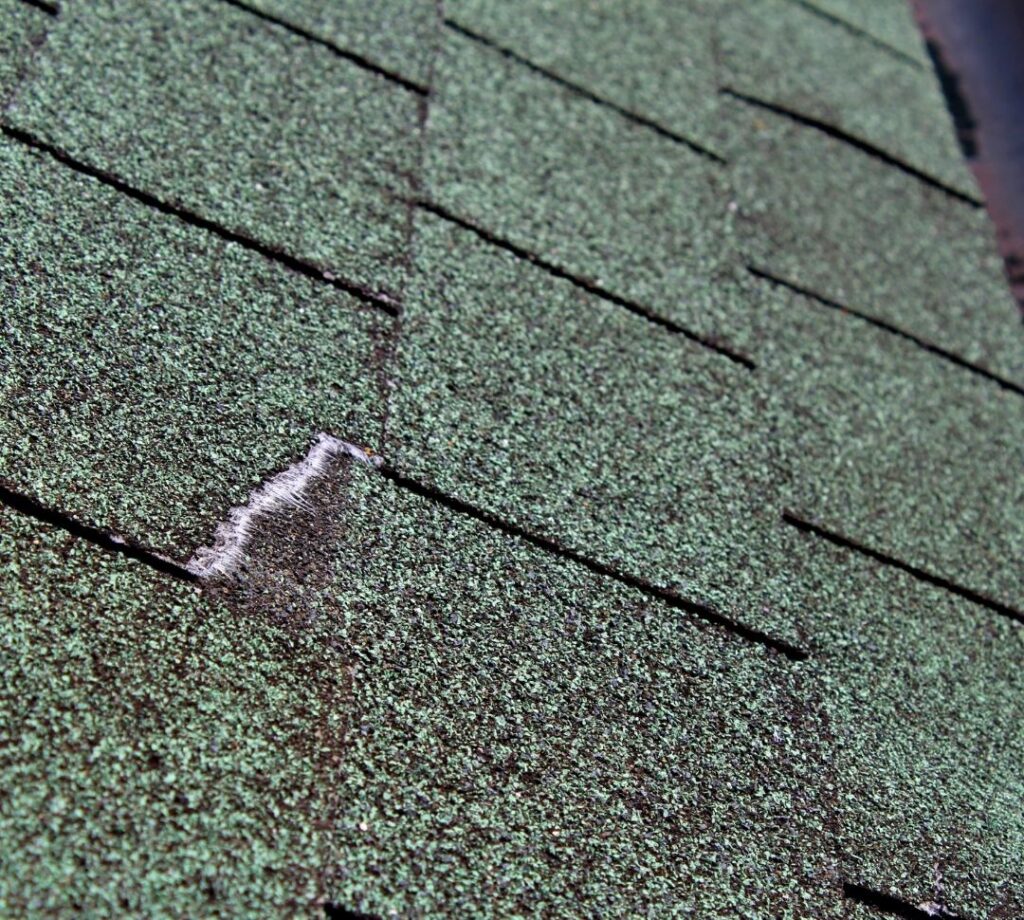
When the black asphalt is exposed (creating what we call “bald spots”), the sun’s UV rays begin to attack the waterproofing layer directly. The asphalt dries out rapidly and begins to crack. Once a shingle cracks, water can seep underneath, rotting the wood decking and leaking into your attic. In winter, these cracks allow water to freeze and expand, widening the breach.
How to Inspect Your Roof (Safely)
You don’t need to climb a ladder to check for granule loss. In fact, we recommend you stay on the ground to avoid injury. Here is how to inspect your home:
Check the Downspouts: Look at the splash blocks or the ground where your gutters drain. Is there a pile of sediment?
Use Binoculars: Stand back from your house and scan the roof slopes, particularly the south-facing sides which get the most sun. Look for patches that appear darker than the rest of the roof. These are often bald spots where the asphalt is showing.
Check for Shine: Sometimes, exposed fiberglass mats will glint in the sunlight. If you see shiny spots on your shingles, the granules are completely gone.
Protect Your New Jersey Roof’s Lifespan
Granule loss is the most reliable odometer for your roof’s lifespan. If you are seeing significant “sand” in your gutters, your roof is likely telling you that it is losing its ability to protect your home.
Don’t wait for water to start dripping through the ceiling. If you suspect your shingles are losing their protective layer, contact us today at 4 Seasons Roofing Company. We can provide a comprehensive assessment to determine if your roof simply needs a repair or if it is time to plan for a replacement.